Affiliate Disclosure: This article contains affiliate links. If you purchase through these links, we may earn a small commission at no extra cost to you. This doesn’t influence our recommendations. Read our full Affiliate Disclosure.
Medical Disclaimer: This content is for informational purposes only and is not medical advice. Always consult your doctor before starting any supplement. These statements have not been evaluated by the FDA. Products mentioned are not intended to diagnose, treat, cure, or prevent any disease.
Quick Verdict
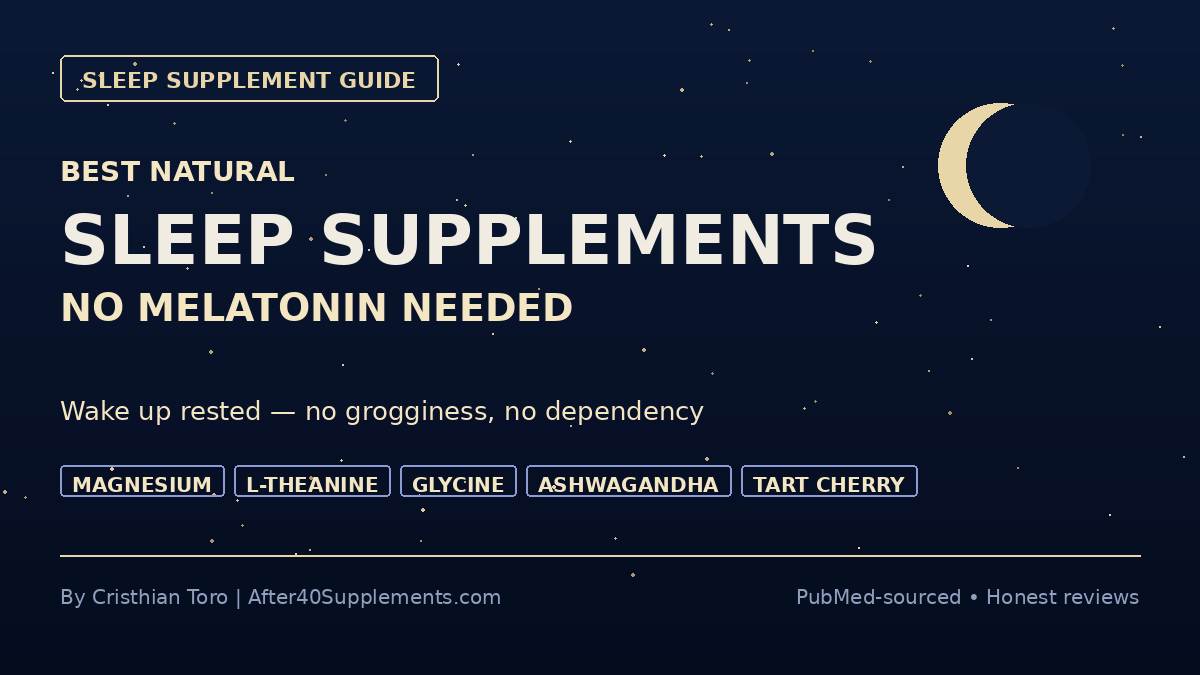
The best natural sleep supplements without melatonin work through your body’s own systems — not by overriding them. Start with magnesium glycinate; add L-theanine and glycine if you need more support.
Best overall: Doctor’s Best High Absorption Magnesium — 200-400mg an hour before bed. Handles physical tension, muscle cramps, and nervous system relaxation.
Best for racing thoughts: NOW Foods L-Theanine 200mg — mental calm without drowsiness, works the same night.
Best for stress-driven insomnia: Jarrow Formulas Sensoril Ashwagandha — lowers cortisol over 2-4 weeks, addresses the “wired but tired” cycle.
The complete stack: Magnesium + L-theanine + Glycine 3g taken together 30-60 minutes before bed. ~$25-35/month. No grogginess, no dependency, no synthetic hormones.
You’ve tried melatonin. It helped you fall asleep, but you woke up at 3 AM feeling groggy, foggy, and somehow more tired than before. Sound familiar?
Melatonin works for some people, but for many adults over 40, it causes morning grogginess, vivid nightmares, or simply stops working after a few weeks. The good news: there are excellent natural sleep supplements that work through completely different mechanisms — no melatonin required.
This guide covers the best natural sleep supplements that help you fall asleep, stay asleep, and wake up actually feeling rested. Every pick is backed by research and safe for long-term use.
Why Sleep Gets Harder After 40
Before jumping into supplements, it helps to understand why your sleep deteriorated in the first place:
Stress hormones shift. Cortisol levels tend to stay elevated later into the evening as you age, keeping your nervous system in “alert mode” when it should be winding down.
Hormonal changes. For women, perimenopause and menopause disrupt sleep through hot flashes, night sweats, and hormonal fluctuations. For men, declining testosterone can affect sleep quality and duration. See our best supplements for women over 40 and best supplements for men over 40 guides for the full hormonal-support stack.
Magnesium depletion. Magnesium levels decrease with age, and this mineral is critical for activating the parasympathetic nervous system — your body’s “rest and digest” mode.
Reduced melatonin production. Your body naturally produces less melatonin as you age, which is why people reach for melatonin supplements. But supplemental melatonin often overshoots your needs, causing side effects.
Accumulated sleep debt. Years of poor sleep habits, screen exposure, caffeine, and stress create compounding sleep dysfunction that a single supplement won’t fix. The best approach combines targeted supplementation with sleep hygiene improvements.
The 6 Best Natural Sleep Supplements (Without Melatonin)
| Supplement | Best For | Dose | Onset |
|---|---|---|---|
| Magnesium Glycinate | Best Overall — physical tension | 200-400mg | 1-2 weeks |
| L-Theanine | Racing thoughts, mental chatter | 200-400mg | Same night |
| Ashwagandha (Sensoril) | Stress-driven insomnia, high cortisol | 225mg | 2-4 weeks |
| Glycine | Sleep onset, core body temperature | 3g | Same night |
| Tart Cherry Extract | Natural melatonin without side effects | 1,000-1,500mg | 1-2 weeks |
| Valerian Root | Traditional herbal, falling asleep faster | 300-600mg | 2-4 weeks |
1. Magnesium Glycinate — Best Overall Sleep Supplement
If you only try one sleep supplement, make it magnesium glycinate. We’ve covered magnesium extensively on this site because it’s that important — and sleep is where it shines brightest.
Magnesium glycinate works through multiple pathways: it relaxes muscles, activates the parasympathetic nervous system, supports GABA receptor function (the neurotransmitter that quiets brain activity), and the glycine component has its own independent calming and sleep-promoting effects. A 2012 double-blind, placebo-controlled trial by Abbasi et al. in the Journal of Research in Medical Sciences found that 500mg of magnesium daily for 8 weeks significantly improved insomnia severity, sleep time, and sleep efficiency in elderly subjects.
Unlike melatonin, magnesium doesn’t cause morning grogginess because it’s not a sedative — it simply supports your body’s natural relaxation process.
Our top pick: Doctor’s Best High Absorption Magnesium — $15 for a two-month supply. See our full Doctor’s Best Magnesium Glycinate review for the deep dive, or compare it to citrate in our glycinate vs citrate guide.
Dosage: 200-400mg elemental magnesium, taken 1 hour before bed.
What to expect: Most people notice improved sleep within 1-2 weeks. Fewer nighttime awakenings and reduced muscle tension are typically the first changes.
2. L-Theanine — Best for Racing Thoughts
L-theanine is an amino acid found naturally in green tea. It’s the reason tea feels calming despite containing caffeine — L-theanine promotes relaxation without drowsiness by increasing alpha brain waves, the same waves produced during meditation.
For people whose sleep problems stem from an overactive mind — the kind where you lie in bed replaying conversations, planning tomorrow, or worrying about things you can’t control — L-theanine is remarkably effective at quieting that mental chatter.
It works synergistically with magnesium: magnesium relaxes the body, L-theanine calms the mind. Together, they address the two most common barriers to falling asleep.
Our top pick: NOW Foods L-Theanine 200mg — affordable, third-party tested, and widely available.
Dosage: 200-400mg taken 30-60 minutes before bed.
What to expect: A noticeable sense of mental calm within 30-45 minutes. Not drowsiness — just a quieter mind. Effects are felt the same night.
3. Ashwagandha (Sensoril) — Best for Stress-Related Insomnia
If your sleep problems are rooted in chronic stress — you’re wired but tired, your cortisol is through the roof, and you feel exhausted all day but wired at night — ashwagandha targets the root cause rather than the symptom.
Ashwagandha has been shown to significantly reduce cortisol levels and improve sleep quality in clinical trials. The Sensoril extract, in particular, has a stronger calming profile than KSM-66 and is specifically suited for evening use.
A 2019 double-blind, placebo-controlled study by Langade et al., published in Cureus, found that 600mg/day of ashwagandha root extract significantly improved sleep quality and reduced sleep onset latency, with the strongest effects in participants diagnosed with insomnia.
Our top pick: Jarrow Formulas Ashwagandha (Sensoril) — calming Sensoril extract at an effective dose. Compare all top options in our best ashwagandha supplements guide.
Dosage: 225mg of Sensoril taken with dinner or 1-2 hours before bed.
What to expect: Gradual improvement over 2-4 weeks as cortisol levels normalize. Not a same-night fix, but a lasting solution for stress-driven sleep problems.
4. Glycine — The Underrated Sleep Amino Acid
Glycine is an amino acid that most people have never heard of as a sleep supplement, which is surprising given how strong the evidence is. A 2012 study by Bannai et al. in Frontiers in Neurology found that 3g of glycine before bed improved subjective sleep quality and reduced daytime sleepiness in healthy volunteers. An earlier 2007 study by Yamadera et al. in Sleep and Biological Rhythms confirmed these findings with polysomnographic data, showing glycine objectively improved sleep efficiency.
Glycine works by lowering core body temperature (a key signal for sleep onset) and by acting as an inhibitory neurotransmitter that calms neural activity. If you’re already taking magnesium glycinate, you’re getting some glycine from that. But supplementing with additional pure glycine amplifies the effect.
Our top pick: NOW Foods Glycine 1000mg — simple, pure, and affordable.
Dosage: 3g (three 1000mg capsules) taken 30-60 minutes before bed. The research consistently uses this dose.
What to expect: Many people notice improvement the first night. Better sleep onset and a more refreshed feeling in the morning. The effect is subtle but consistent.
5. Tart Cherry Extract — Best Natural Melatonin Source
If you want melatonin’s benefits without synthetic melatonin’s side effects, tart cherry is the answer. Tart cherries (specifically Montmorency cherries) are one of the few natural food sources of melatonin, but they deliver it in small, natural amounts that your body handles more gracefully than a 5mg melatonin pill.
Tart cherry also contains anti-inflammatory compounds that benefit joint health and exercise recovery — a nice bonus for adults over 40.
A 2012 double-blind crossover study by Howatson et al. in the European Journal of Nutrition found that tart cherry juice concentrate significantly increased melatonin levels, total sleep time (+34 minutes), and sleep efficiency compared to placebo in healthy adults.
Our top pick: Sports Research Tart Cherry Concentrate — concentrated capsule form, no sugar or juice calories.
Dosage: 1,000-1,500mg of tart cherry extract daily, taken in the evening.
What to expect: Modest improvement in sleep duration and quality within 1-2 weeks. The effects are gentler than synthetic melatonin — no grogginess.
6. Valerian Root — The Traditional Herbal Option
Valerian root has been used as a sleep remedy for centuries. It works by increasing GABA activity in the brain, similar to how pharmaceutical sleep aids work but much more gently.
The evidence for valerian is mixed — some studies show clear sleep benefits, others don’t. However, it has a long safety track record, and many people find it helpful, particularly for reducing the time it takes to fall asleep.
Valerian works best when taken consistently over 2-4 weeks rather than as an occasional sleep aid.
Our top pick: Nature’s Way Valerian Root — standardized extract from a trusted herbal brand.
Dosage: 300-600mg taken 30 minutes to 2 hours before bed.
What to expect: Mild calming effect that builds over 2-4 weeks of regular use. Don’t judge it after one night — consistency is key with valerian.
The Ultimate No-Melatonin Sleep Stack
If you want the most effective natural sleep protocol, combine these three supplements for maximum effect through different mechanisms:
The stack:
- Magnesium glycinate (200-400mg) — relaxes muscles and body
- L-theanine (200mg) — calms the mind
- Glycine (3g) — lowers core temperature and promotes deep sleep
When to take: All three together, 30-60 minutes before bed.
Cost: Approximately $25-35/month for all three. If sleep is your first supplement priority, our beginner’s guide to supplements at 40 covers how to build a routine you’ll actually maintain.
Why it works: Each supplement targets a different barrier to sleep. Magnesium handles physical tension, L-theanine handles mental chatter, and glycine promotes the physiological conditions for sleep onset. Together, they create a comprehensive sleep-support system without any sedative effects or morning grogginess.
Sleep Supplements vs. Sleep Hygiene
Supplements work best when combined with good sleep practices. No pill can overcome:
- Screen exposure until midnight. Blue light suppresses natural melatonin. Stop screens 1 hour before bed or use blue light blocking glasses.
- Caffeine after 2 PM. Caffeine has a half-life of 5-6 hours. That 4 PM coffee is still 50% active at 10 PM.
- Irregular sleep schedule. Your circadian rhythm craves consistency. Going to bed and waking up at the same time daily (yes, weekends too) is the single most impactful sleep hygiene practice.
- A hot, bright, noisy bedroom. Cool (65-68°F), dark, and quiet. These aren’t preferences — they’re biological requirements for quality sleep.
- Alcohol before bed. A nightcap helps you fall asleep faster but destroys sleep quality. It fragments sleep architecture, suppresses REM sleep, and causes early morning waking.
Think of supplements as the final 20% of your sleep optimization. Get the other 80% right first, and the supplements will amplify your results significantly.
Common Questions About Natural Sleep Supplements
Can I take multiple sleep supplements together safely?
Yes — the magnesium + L-theanine + glycine stack in this article is specifically designed to be combined, and they work through different mechanisms with no interaction problems. Ashwagandha also stacks safely with any of these. The one exception: don’t combine valerian root with other GABA-modulating supplements at high doses, and never combine any of these with prescription sleep medication or alcohol without doctor approval.
Why is magnesium glycinate better than magnesium citrate for sleep?
Two reasons. First, glycine (the amino acid attached to magnesium in glycinate) is itself a calming neurotransmitter that promotes sleep. So glycinate delivers magnesium plus a sleep-supporting compound in one supplement. Second, citrate has a laxative effect that many people find disruptive to sleep. For daily bedtime use, glycinate is gentler and more targeted for sleep.
How long before natural sleep supplements start working?
It depends on the mechanism. L-theanine and glycine often produce noticeable effects the first night. Magnesium and tart cherry typically improve sleep within 1-2 weeks. Ashwagandha and valerian root work on longer timelines — expect 2-4 weeks before judging them. This is fundamentally different from melatonin, which works immediately but often stops working with regular use.
Will these supplements cause morning grogginess like melatonin?
No. None of the supplements in this guide are sedatives. They work by supporting your body’s own relaxation and sleep pathways, not by forcing sleep or acting as a synthetic hormone. Most people wake up feeling more rested and clearer-headed, not groggier. If you do notice morning grogginess with any of them, reduce the dose or move the timing earlier in the evening.
Do I need to cycle these supplements or take breaks?
Magnesium, glycine, L-theanine, and tart cherry are all safe for indefinite daily use — no cycling required. Ashwagandha is one where some people cycle 8 weeks on / 2 weeks off, though continuous use is also fine for most. Valerian root you can take as needed or continuously. None of these build tolerance the way melatonin does, so long-term use is the norm rather than the exception.
Can I stop taking melatonin cold turkey when I switch to these?
Yes. Melatonin isn’t physically addictive, so you can stop anytime without withdrawal. You may experience 3-7 nights of harder sleep as your body readjusts, especially if you’ve used it long-term. Start the magnesium + L-theanine combo simultaneously — they’ll help bridge the transition. Give the new stack 2 full weeks before judging it against melatonin.
The Bottom Line
You don’t need melatonin to sleep better after 40. The best natural sleep supplements work with your body’s own systems rather than overriding them with a synthetic hormone.
Start with magnesium glycinate — it’s the single most impactful sleep supplement for most people, with benefits that extend far beyond sleep. If you need more help, add L-theanine for mental calm or ashwagandha for stress-related insomnia.
Better sleep is possible without grogginess, dependency, or side effects. Give your chosen supplements 2-4 weeks of consistent use, pair them with solid sleep habits, and let your body remember how to rest. And once sleep improves, the payoff shows up everywhere — see our best supplements for energy after 40 guide for the daytime side of the equation.
Related Reading
- Best Magnesium Supplement for Sleep — deep dive on the foundation supplement
- Magnesium Glycinate vs Citrate — why glycinate wins for sleep
- Best Ashwagandha Supplements — top 10 picks for stress-driven insomnia
- How to Start Taking Supplements at 40 — beginner’s guide, sleep-first approach
- Best Supplements for Energy After 40 — daytime side of the equation
- Best Supplements for Women Over 40 — hormonal support for sleep
- Best Supplements for Men Over 40 — testosterone and sleep
Sources
- Abbasi, B., Kimiagar, M., Sadeghniiat, K., et al. (2012). The effect of magnesium supplementation on primary insomnia in elderly: A double-blind placebo-controlled clinical trial. Journal of Research in Medical Sciences, 17(12), 1161-1169. https://pubmed.ncbi.nlm.nih.gov/23853635/
- Bannai, M., Kawai, N., Ono, K., Nakahara, K., & Murakami, N. (2012). The effects of glycine on subjective daytime performance in partially sleep-restricted healthy volunteers. Frontiers in Neurology, 3, 61. https://pubmed.ncbi.nlm.nih.gov/22529837/
- Yamadera, W., Inagawa, K., Chiba, S., et al. (2007). Glycine ingestion improves subjective sleep quality in human volunteers, correlating with polysomnographic changes. Sleep and Biological Rhythms, 5(2), 126-131.
- Langade, D., Kanchi, S., Salve, J., et al. (2019). Efficacy and Safety of Ashwagandha Root Extract in Insomnia and Anxiety: A Double-blind, Randomized, Placebo-controlled Study. Cureus, 11(9), e5797. https://pubmed.ncbi.nlm.nih.gov/31728244/
- Howatson, G., Bell, P.G., Tallent, J., et al. (2012). Effect of tart cherry juice on melatonin levels and enhanced sleep quality. European Journal of Nutrition, 51(8), 909-916. https://pubmed.ncbi.nlm.nih.gov/22038497/
Affiliate Disclosure: This article contains affiliate links. If you purchase through these links, we may earn a small commission at no additional cost to you. We only recommend products we’ve researched and believe in. See our full Affiliate Disclosure for details.
This content is for informational purposes only and is not medical advice. Always consult with your healthcare provider before starting any new supplement regimen.

Cristhian Toro is the founder of After 40 Supplements. He started researching supplements years ago to optimize his training and recovery at the gym, and now translates the science behind popular supplements into clear, honest guides for adults over 40. He’s not a doctor — he’s someone who reads the research, compares the products, and shares what actually works (and what doesn’t), with sources you can verify.