Affiliate Disclosure: This article contains affiliate links. If you purchase through these links, we may earn a small commission at no extra cost to you. This doesn’t influence our recommendations. Read our full Affiliate Disclosure.
Medical Disclaimer: This content is for informational purposes only and is not medical advice. Iron supplementation should ideally be based on bloodwork (ferritin, hemoglobin, transferrin saturation). Always consult your doctor before starting iron, especially if you’re pregnant, nursing, or on medication. These statements have not been evaluated by the FDA.
Quick Verdict
The best supplements for heart health over 40 support the systems that naturally decline with age — nitric oxide production, cellular energy, healthy inflammation response, and vessel function. No single supplement does everything; the goal is targeted, evidence-based support layered onto a foundation of diet, exercise, and sleep.
Best overall for nitric oxide support: Humann’s SuperBeets Heart Chews Zero Sugar — clinically studied grape seed extract plus beetroot powder in convenient daily chews. The easiest entry point for adults over 40 who want daily cardiovascular support.
Best for cellular energy: Qunol Mega Ubiquinol CoQ10 — 100mg active ubiquinol form your body can use directly after 40.
Best omega-3: Nordic Naturals ProOmega — the foundational EPA/DHA supplement with decades of cardiovascular research behind it.
Best magnesium: Doctor’s Best High Absorption Magnesium — magnesium glycinate supports vessel relaxation and healthy heart rhythm at a friendly price.
Best foundational support: NatureWise Vitamin D3 2,000 IU — vitamin D status is linked to cardiovascular wellness, and deficiency is common after 40.
Where to start: If you’re building from zero, start with magnesium and vitamin D3 (foundation), then add omega-3 within a month, then layer CoQ10 and SuperBeets. Don’t buy everything at once.
Why Heart Health Matters More After 40
The cardiovascular system is more than the heart — it’s a network of roughly 60,000 miles of blood vessels moving oxygen and nutrients to every cell in the body. And several of the systems that keep this network running smoothly begin to shift after 40.
Nitric oxide production declines with age. Nitric oxide is a signaling molecule your body produces that tells blood vessels to relax and open up. When levels are healthy, circulation flows efficiently. Production peaks in your 20s and drops progressively from there.
Coenzyme Q10 levels drop. CoQ10 is essential for cellular energy production in every cell, and heart cells are among the most energy-hungry in the body. Your natural CoQ10 production peaks in your late 20s and can drop by 40-50% by age 65.
Omega-3 status often lags. The average Western diet is heavy in omega-6 and light in omega-3 (EPA and DHA), the fatty acids most researched for cardiovascular support.
Magnesium intake is commonly low. Roughly half of adults in the US don’t hit the recommended daily magnesium intake. Magnesium plays a role in vessel relaxation and healthy heart rhythm.
Vitamin D deficiency is widespread. Vitamin D status is linked to a wide range of cardiovascular markers, and deficiency becomes more common as we get older and spend less time outdoors.
None of these shifts happen dramatically overnight, but the cumulative effect is why cardiovascular support becomes more important each decade after 40. The good news: each of these systems can be supported through targeted, well-researched supplements.
The 5 Best Supplements for Heart Health Over 40
Here’s the at-a-glance comparison of our 5 picks, followed by the deep dive on each one.
| Supplement | Best For | Daily Dose | Price Range |
|---|---|---|---|
| SuperBeets Heart Chews Zero Sugar ★ Top Pick | Nitric oxide & circulation support | 2 chews | $$ |
| Qunol Mega Ubiquinol CoQ10 | Cellular energy production | 100mg | $$ |
| Nordic Naturals ProOmega | Foundational omega-3 | 2 softgels | $$ |
| Doctor’s Best Magnesium | Vessel & rhythm support | 200-400mg | $ |
| NatureWise Vitamin D3 | Foundational wellness | 2,000 IU | $ |
1. SuperBeets Heart Chews Zero Sugar — Best Overall
Rating: 4.5/5
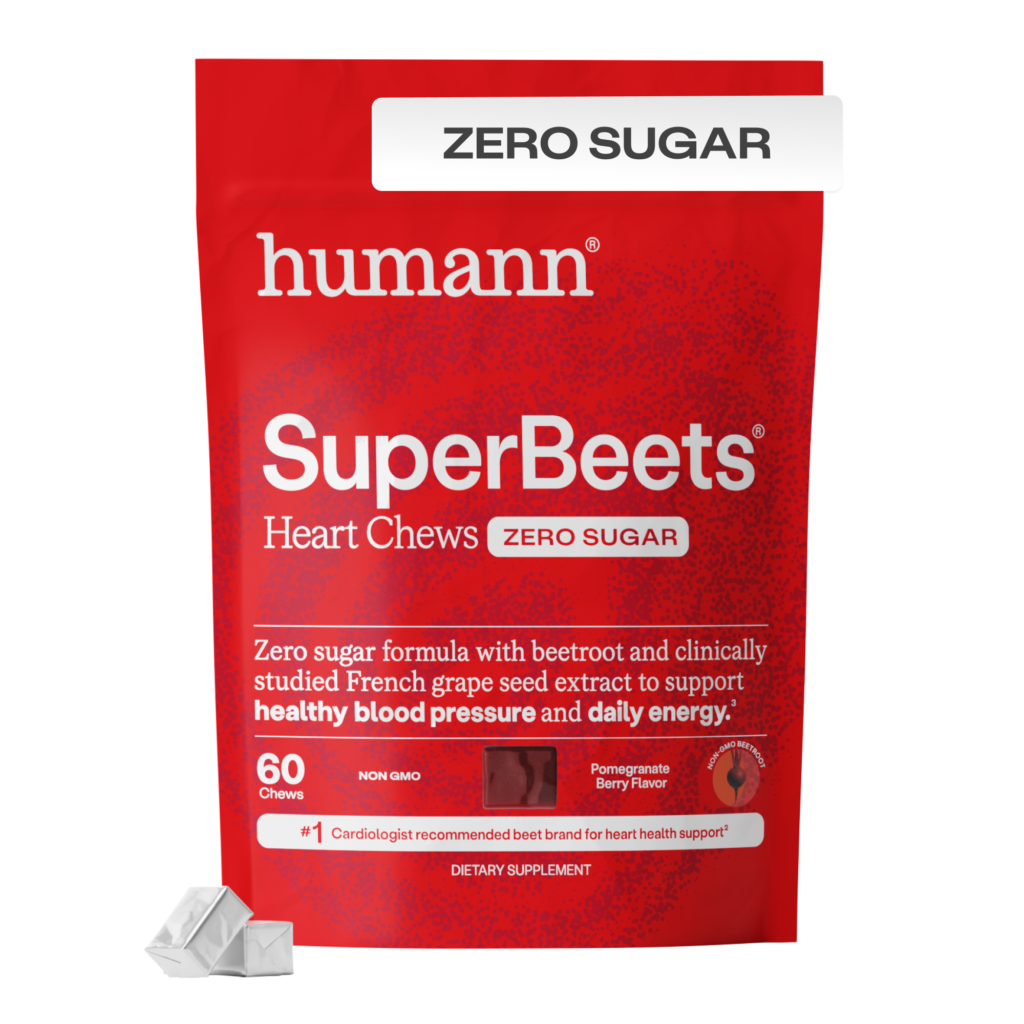
SuperBeets Heart Chews Zero Sugar from Humann earn our top pick because they solve the two problems that derail most cardiovascular supplement routines: taste and convenience. Instead of mixing a beetroot powder into water every morning, you eat two soft pomegranate berry chews. Same functional ingredients, dramatically higher chance you’ll actually do it every day.
The formulation delivers 500mg beetroot powder and 150mg clinically studied French grape seed extract per 2-chew serving — meaningful doses of two ingredients that work through complementary pathways to support nitric oxide availability and healthy circulation.
What we like:
- Real doses of two well-studied ingredients (500mg beetroot + 150mg grape seed extract)
- Zero sugar formulation avoids the added sugar found in most flavored chews
- Sold and shipped directly by Humann on Amazon
- Non-GMO, gluten-free, vegan, third-party tested
- Pomegranate berry flavor is genuinely pleasant
What could be better:
- Premium pricing (~$40/month for the single pack)
- Requires daily consistency for benefits to show up
Daily dose: 2 chews, same time each day
Where to buy: SuperBeets Heart Chews Zero Sugar (60ct, 30-day supply)
Read the deep dive: Our full SuperBeets Heart Chews Zero Sugar review
2. Qunol Mega Ubiquinol CoQ10 — Best for Cellular Energy
Rating: 5/5
Qunol Mega Ubiquinol is our top CoQ10 pick specifically for adults over 40 because it delivers the active ubiquinol form — the form your body can use directly, without needing to convert it. After 40, your body’s ability to convert ubiquinone (the cheaper form) into active ubiquinol drops significantly. Paying for ubiquinol upfront makes sense for our audience.
Qunol pairs this with a patented water-and-fat-soluble absorption technology, which addresses CoQ10’s notorious absorption challenges. It’s the #1 cardiologist-recommended CoQ10 brand for a reason.
What we like:
- Active ubiquinol form (the right choice after 40)
- Patented absorption technology
- Trusted brand with clinical backing
- Absorbs with or without food
What could be better:
- More expensive than basic ubiquinone CoQ10
- Softgels are larger than average
Daily dose: 100mg (1 softgel) — 200-300mg if you’re on statin medication (under doctor guidance)
Where to buy: Qunol Mega Ubiquinol CoQ10 100mg
Read the deep dive: Our full CoQ10 supplement review
3. Nordic Naturals ProOmega — Best Omega-3
Rating: 5/5
Nordic Naturals ProOmega is the omega-3 supplement we recommend without hesitation. High-potency EPA and DHA in triglyceride form (the same form found in fish), sourced from wild-caught fish, and IFOS 5-star certified for purity and freshness. The lemon flavor essentially eliminates the fish burps most people complain about with cheaper omega-3s.
Omega-3s are one of the most consistently researched supplements in the cardiovascular support category, and quality matters more here than with almost any other supplement — cheap fish oil can be rancid before you even open the bottle.
What we like:
- IFOS 5-star certified (highest purity standard)
- Triglyceride form (better absorbed than ethyl ester)
- Wild-caught fish sourcing
- Lemon flavor eliminates fishy aftertaste
What could be better:
- Premium pricing compared to basic fish oil
- Softgels are on the larger side
Daily dose: 2 softgels with a meal
Where to buy: Nordic Naturals ProOmega
4. Doctor’s Best High Absorption Magnesium — Best Magnesium
Rating: 5/5
Magnesium is one of the most under-consumed minerals in the modern diet, and it plays direct roles in vessel relaxation, healthy heart rhythm, and stress response — all of which matter for cardiovascular wellness after 40. Doctor’s Best High Absorption Magnesium delivers 200mg of elemental magnesium per serving in the glycinate/lysinate chelate form, which is gentle on the stomach and well-absorbed.
At around $15 for a two-month supply, it’s also the best value on this list. Magnesium is the supplement that gives you the most cardiovascular support for the smallest dollar spend.
What we like:
- Chelated form is well-absorbed and gentle on stomach
- Excellent value (~$15 for a 60-day supply)
- Supports sleep quality as a bonus (take at night)
- Trusted, established brand
What could be better:
- Requires 2 capsules per serving to hit the 200mg dose
- Not the highest single-dose magnesium available
Daily dose: 200-400mg elemental magnesium (2-4 capsules), taken with dinner or before bed
Where to buy: Doctor’s Best High Absorption Magnesium
Compare forms: Magnesium glycinate vs citrate — which form is better?
5. NatureWise Vitamin D3 2,000 IU — Best Foundational Support
Rating: 5/5
Vitamin D is included on this list because vitamin D status is meaningfully linked to cardiovascular wellness, and deficiency is remarkably common after 40. You can’t feel low vitamin D directly, but you can feel the downstream effects — including on cardiovascular function.
NatureWise 2,000 IU is our pick because it uses cholecalciferol (the active form) in olive oil-based softgels for optimal absorption. Third-party tested, no fillers, and priced accessibly. If you’re only going to add one truly foundational supplement to your routine, D3 is a strong candidate.
What we like:
- Olive oil-based softgels for better absorption
- 2,000 IU is the right dose for most adults over 40
- Third-party tested
- Very affordable long-term
What could be better:
- Ideally paired with vitamin K2 for arterial support (buy separately)
- 2,000 IU may be insufficient if you’re significantly deficient (get bloodwork done)
Daily dose: 2,000 IU with a meal containing fat
Where to buy: NatureWise Vitamin D3 2,000 IU
How to Build Your Heart Health Stack
The mistake most people make is trying to take all 5 of these at once. That approach fails for two reasons: it’s expensive, and you can’t tell what’s actually working when you introduce five variables simultaneously.
Here’s the phased approach we recommend:
Month 1 — Foundation: Start with Doctor’s Best Magnesium (200mg with dinner) and NatureWise Vitamin D3 (2,000 IU with breakfast). Total cost: ~$15-20/month. These are the foundation of cardiovascular wellness after 40 and improve sleep, energy, and bone health as a bonus.
Month 2 — Add omega-3: Add Nordic Naturals ProOmega (2 softgels with a meal). Total cost climbs to ~$35-40/month. Omega-3 works quietly in the background — you may not feel it directly, but the research is strong enough that this is the highest-leverage third addition.
Month 3 — Add cellular energy: Add Qunol Mega Ubiquinol CoQ10 (100mg once daily). Total cost climbs to ~$70-80/month. Many people notice energy improvements within 2-4 weeks of adding CoQ10.
Month 4+ — Add nitric oxide support: Add Humann’s SuperBeets Heart Chews Zero Sugar (2 chews daily) as the final layer. Total cost: ~$100-120/month for the complete stack.
For adults new to supplements entirely, our beginner’s guide to supplements at 40 covers the same phased approach with even more detail on how to build a routine you’ll actually maintain.
What This List Deliberately Skips
We kept this list to 5 picks because supplement lists that recommend 12-15 products are useless in practice — nobody takes 15 supplements consistently. That said, a few notable categories were considered and set aside:
Vitamin K2: Often recommended to pair with D3 for arterial support. Legitimate research, but adds complexity. If you’re already comfortable with D3, adding a D3+K2 combination product is a reasonable upgrade later.
Fiber supplements: Support cardiovascular wellness indirectly through gut health. Better addressed through diet (oats, beans, vegetables) than pills for most people.
Aged garlic extract: Well-researched but has a small niche audience. If garlic taste doesn’t bother you, worth considering as a Tier 2 addition.
Multivitamins with heart-health blends: Generally underdosed and expensive per active milligram. Prefer targeted single-ingredient supplements over multi blends.
Nitrate-boosting drinks and shots: SuperBeets Heart Chews Zero Sugar covers this category in a more convenient format.
Common Questions About Heart Health Supplements Over 40
Which supplement should I take first if I can only afford one?
Magnesium glycinate. It’s the cheapest supplement on this list (~$15/month), the most under-consumed nutrient in the modern diet, and it supports vessel relaxation, healthy heart rhythm, sleep quality, and stress response — a broad functional footprint for a small dollar spend. If budget is truly one supplement, magnesium is the answer.
Can I take all 5 of these supplements together safely?
Yes, all 5 are safe to take together — they work through different mechanisms with no interaction concerns among themselves. However, if you take prescription medication (especially blood pressure medication or blood thinners), talk to your doctor before starting any of them. The interactions to watch for are between supplements and medications, not between the supplements on this list.
How long before heart health supplements start showing benefits?
Timelines vary by supplement. Magnesium often supports sleep quality within 1-2 weeks. CoQ10 energy support is typically noticeable within 2-4 weeks. Omega-3s work quietly and take 2-3 months to reach optimal blood levels. SuperBeets Heart Chews Zero Sugar tend to produce noticeable energy support within 2-4 weeks. Vitamin D3 takes 8-12 weeks to raise blood levels meaningfully. Give the full stack 3 months of consistent use before judging results.
Do I still need to eat healthy if I take these supplements?
Absolutely yes. Supplements support cardiovascular wellness but do not substitute for diet, exercise, sleep, or stress management. A Mediterranean-style eating pattern rich in vegetables, fish, olive oil, nuts, and whole grains has decades of research behind it for cardiovascular support. The supplements on this list amplify a good foundation — they cannot compensate for a poor one.
What about supplements I see advertised specifically for blood pressure?
Be cautious of any supplement making direct blood pressure claims — the FDA regulates specific health claims tightly, and most supplement marketing that promises to “lower blood pressure” is either overstating research or making claims the ingredients don’t fully support. Focus on supplements with solid research for cardiovascular wellness generally (like the ones on this list), and let your doctor monitor your actual blood pressure through routine checkups.
Should I get bloodwork before starting these supplements?
For magnesium, omega-3, and SuperBeets Heart Chews Zero Sugar — bloodwork isn’t strictly necessary before starting at standard doses. For vitamin D3 and CoQ10, bloodwork adds value. Vitamin D testing tells you whether 2,000 IU is enough or if you need a higher dose to correct actual deficiency. CoQ10 doesn’t require a specific test, but if you’re on statin medication, discussing CoQ10 supplementation with your doctor is worthwhile — statins are known to affect natural CoQ10 production.
The Bottom Line
The best supplements for heart health over 40 aren’t the ones with the flashiest marketing — they’re the ones with real research behind meaningful doses, in forms your body can actually use. The 5 picks on this list check those boxes, and each addresses a different system that becomes more important to support as we get past 40.
If you’re brand new to cardiovascular supplements, start with magnesium and vitamin D3 as your foundation, add omega-3 within a month, and layer in Humann’s SuperBeets Heart Chews Zero Sugar and CoQ10 as your routine solidifies. You’ll build a genuinely comprehensive heart health stack for around $100-120/month, and you’ll be able to tell what’s working because you added things one at a time.
Whatever you choose, remember that supplements amplify a solid foundation. The exercise, sleep, and eating patterns you build in your 40s are what carry you into your 60s and 70s in good cardiovascular shape. These supplements make that foundation stronger — they don’t replace it.
Related Reading
- SuperBeets Heart Chews Zero Sugar Review — deep dive on our top nitric oxide pick
- CoQ10 Supplement Review — deep dive on our CoQ10 pick (ubiquinol vs ubiquinone)
- Best Supplements for Energy After 40 — cellular energy stack (overlaps with heart health)
- Best Supplements for Men Over 40 — full stack including cardiovascular support
- Best Supplements for Women Over 40 — full stack including cardiovascular support
- How to Start Taking Supplements at 40 — beginner’s roadmap
- Magnesium Glycinate vs Citrate — which form works best for cardiovascular support
- Best Magnesium Supplement for Sleep — deep dive on the foundation supplement
Sources
- Yamakoshi, J., Kataoka, S., Koga, T., & Ariga, T. (1999). Proanthocyanidin-rich extract from grape seeds attenuates the development of aortic atherosclerosis in cholesterol-fed rabbits. Atherosclerosis, 142(1), 139-149. https://pubmed.ncbi.nlm.nih.gov/9920515/
- Lansley, K.E., Winyard, P.G., Bailey, S.J., et al. (2011). Acute dietary nitrate supplementation improves cycling time trial performance. Medicine and Science in Sports and Exercise, 43(6), 1125-1131. https://pubmed.ncbi.nlm.nih.gov/21471821/
- Mortensen, S.A., Rosenfeldt, F., Kumar, A., et al. (2014). The effect of coenzyme Q10 on morbidity and mortality in chronic heart failure: results from Q-SYMBIO: a randomized double-blind trial. JACC. Heart Failure, 2(6), 641-649. https://pubmed.ncbi.nlm.nih.gov/25282031/
- Rimm, E.B., Appel, L.J., Chiuve, S.E., et al. (2018). Seafood Long-Chain n-3 Polyunsaturated Fatty Acids and Cardiovascular Disease: A Science Advisory From the American Heart Association. Circulation, 138(1), e35-e47. https://pubmed.ncbi.nlm.nih.gov/29773586/
- Zhang, X., Li, Y., Del Gobbo, L.C., et al. (2016). Effects of Magnesium Supplementation on Blood Pressure: A Meta-Analysis of Randomized Double-Blind Placebo-Controlled Trials. Hypertension, 68(2), 324-333. https://pubmed.ncbi.nlm.nih.gov/27402922/
- Wang, L., Song, Y., Manson, J.E., et al. (2012). Circulating 25-hydroxy-vitamin D and risk of cardiovascular disease: a meta-analysis of prospective studies. Circulation: Cardiovascular Quality and Outcomes, 5(6), 819-829. https://pubmed.ncbi.nlm.nih.gov/23149428/
Affiliate Disclosure: This article contains affiliate links. If you purchase through these links, we may earn a small commission at no extra cost to you. This doesn’t influence our recommendations. Read our full Affiliate Disclosure.
Medical Disclaimer: This content is for informational purposes only and is not medical advice. Iron supplementation should ideally be based on bloodwork (ferritin, hemoglobin, transferrin saturation). Always consult your doctor before starting iron, especially if you’re pregnant, nursing, or on medication. These statements have not been evaluated by the FDA.

Cristhian Toro is the founder of After 40 Supplements. He started researching supplements years ago to optimize his training and recovery at the gym, and now translates the science behind popular supplements into clear, honest guides for adults over 40. He’s not a doctor — he’s someone who reads the research, compares the products, and shares what actually works (and what doesn’t), with sources you can verify.